

Persian Psychologist: Farsi-Speaking Therapist
⭐ What Is a Persian Psychologist?
A Persian psychologist is a licensed mental health professional who provides psychological assessment and therapy services to people who speak Farsi (Persian) or identify with Iranian culture. A Persian or Iranian psychologist understands not only the language, but also the values, family dynamics, communication style, and cultural background of Iranian communities living abroad.
Meaning of Persian / Iranian psychologist
The terms Persian psychologist and Iranian psychologist are often used interchangeably. Both usually refer to a psychologist who:
speaks Farsi fluently
understands Iranian culture, traditions, and social norms
has experience working with Iranians, immigrants, and expats
provides therapy in Farsi and/or English
Some people prefer the word Persian, some use Iranian. In therapy, what matters most is not the label, but whether the therapist is culturally sensitive and able to communicate in a language you feel comfortable with.
Difference between psychologist, counselor, and therapist
Many Iranians abroad search for Persian psychologist, but also come across terms such as counselor or therapist. These words are related but not always identical:
Psychologist
usually holds a doctorate (PhD or PsyD) and is trained in assessment, diagnosis, and psychotherapy.Therapist
a broader term that includes psychologists, clinical social workers, marriage and family therapists, etc.Counselor
often focuses on specific problems such as stress, relationships, career issues, or life transitions.
In everyday language, people often use these terms interchangeably. The most important factor is finding a qualified, licensed Persian psychologist or Farsi-speaking therapist you feel safe and comfortable with.
Why language and culture matter in therapy
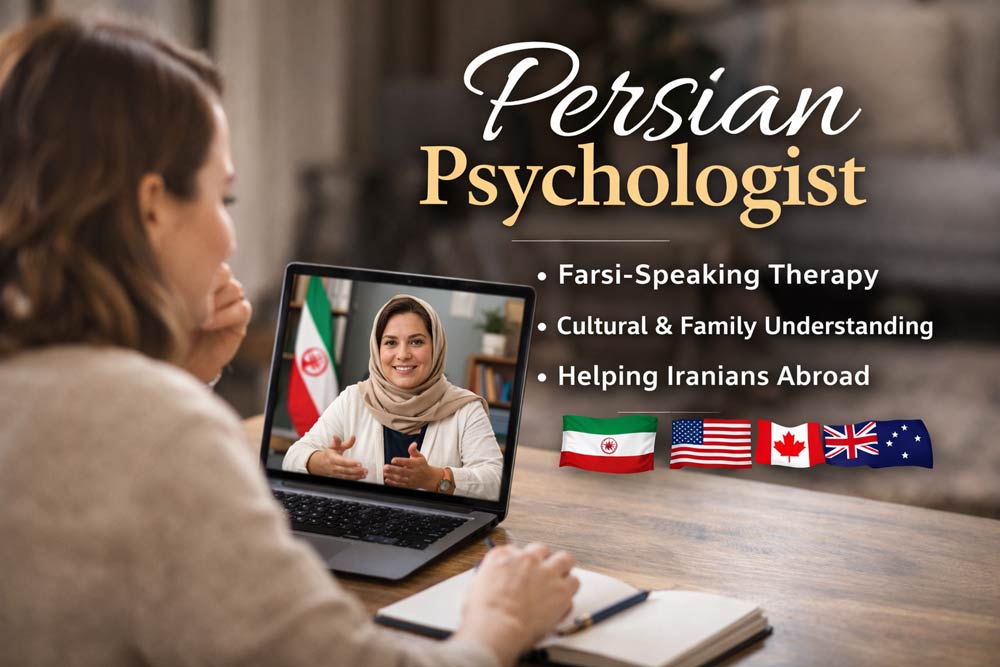
Effective therapy depends on trust, understanding, and emotional expression. For many Iranians, expressing deep feelings in English can be difficult. Working with a Persian psychologist allows clients to:
speak Farsi naturally without translating emotions
feel understood without explaining cultural background
talk openly about family expectations and social pressures
feel less judged about topics that may be stigmatized in their community
Language is not only words — it carries memories, emotions, and meaning. A Persian-speaking therapist understands both the language and the unspoken cultural layers behind it.
🌍 Why Iranians Abroad Prefer a Persian Psychologist
Many Iranians living in the USA, Canada, Europe, Australia, and other countries actively search for a Persian psychologist because therapy in their mother tongue feels more natural and emotionally safe.
Speaking Farsi feels safer and more comfortable
For many clients, Farsi is the language of:
family
childhood memories
emotions
inner thoughts
Talking about pain, trauma, relationships, or family problems is often easier in Farsi than in a second language. With a Persian psychologist, clients don’t need to search for words or worry about grammar; they can simply talk from the heart.
Cultural values: family, marriage, expectations
Iranian culture places strong emphasis on:
family honor
respect for parents
marriage and relationships
academic and career success
social expectations
A Persian psychologist understands:
overinvolved parents
extended family pressure
expectations about marriage and children
collectivist family values
This reduces the need to constantly explain cultural context during therapy sessions.
Stigma around mental health in Iranian culture
In many Iranian communities, mental health issues are still associated with stigma, shame, or misunderstanding. People may be told to “be strong,” “ignore it,” or “keep family problems private.” A Persian psychologist understands this dynamic and helps clients:
break stigma about seeking therapy
normalize anxiety and depression
talk openly without fear of judgment
learn healthier coping strategies
Religion, immigration, and identity issues
Iranians abroad often experience multiple layers of stress, including:
immigration and acculturation pressure
homesickness and loneliness
language barriers
identity confusion between cultures
changes in family roles after migration
religious and social differences
A Persian psychologist or Farsi-speaking therapist is familiar with these challenges and can provide culturally aware, compassionate counseling specifically tailored to the Iranian experience.
💻 Online vs. In-Person Persian Psychologist — Which Is Better?
When looking for a Persian psychologist, many Iranians abroad wonder whether online therapy or in-person sessions are more effective. The truth is that both options can work very well, depending on your needs, lifestyle, and comfort level.
Advantages of online therapy
Online sessions with a Persian psychologist have become extremely popular among Iranians living abroad because they offer:
access to a Farsi-speaking therapist anywhere in the world
ability to choose from more psychologists, not just local ones
convenience from home, office, or while traveling
no commute or transportation costs
flexibility for busy schedules
easier for people who feel shy about face-to-face sessions
For many clients, online therapy feels less intimidating and helps them open up more easily, especially when talking about sensitive cultural or family topics.
Privacy for small communities abroad
In smaller Iranian communities abroad, people often worry:
“Someone might see me going to a clinic.”
“People may talk about me.”
“What if someone I know is there?”
Online therapy with a Persian psychologist protects privacy because:
sessions are held from home
there is no public waiting room
nobody sees you entering a clinic
you can choose therapists outside your country or city
This makes therapy feel safer for those who want complete confidentiality.
Time-zone and accessibility
Iranians are spread across many countries and time zones. Online therapy allows you to:
find a Persian psychologist who matches your time zone
book late-evening or weekend sessions
access therapy even if you live in a remote area
continue sessions when you move to another city or country
Accessibility is especially important for students, new immigrants, parents with young children, or people with mobility limitations.
When in-person therapy is better
In-person therapy with a Persian psychologist may be preferable when:
you feel more connected and comfortable face-to-face
you need psychological testing or assessment that must be done in person
severe mental health conditions require closer monitoring
body language and non-verbal communication are important to you
Some clients simply like sitting in a therapist’s office — it creates a clear separation between daily life and therapeutic space. The best choice is the one that helps you feel safe, focused, and supported.
🧠 What Issues Can a Persian Psychologist Help With?
A Persian psychologist or Farsi-speaking therapist can support Iranians abroad with a wide range of emotional, relational, and cultural challenges.
Anxiety and panic
A Persian psychologist can help with:
constant worry
panic attacks
social anxiety
fear of judgment
work or study stress
Therapy focuses on learning coping strategies, thought management, relaxation, and confidence building.
Depression and sadness
Many Iranians abroad experience:
sadness and loss of motivation
hopelessness or emptiness
sleep and appetite changes
loss of interest in activities
lack of energy
A Persian psychologist understands both the emotional and cultural factors that contribute to depression, including separation from family and immigration stress.
Relationship & marriage problems
Therapy in Farsi allows couples to talk openly about:
conflicts
emotional disconnection
financial stress
in-laws and family interference
cultural expectations about marriage roles
A Persian psychologist understands Iranian relationship dynamics and communication patterns.
Immigration stress & homesickness
Moving to another country often brings:
loneliness
identity confusion
guilt about family left behind
difficulty adjusting to a new culture
fear of the future
A Persian psychologist helps clients work through grief, homesickness, and acculturation stress in a culturally sensitive way.
Cultural adjustment & identity issues
Iranians abroad may ask:
“Am I Iranian or Western?”
“How do I live between two cultures?”
“How do I raise children in a foreign society?”
Therapy supports identity development, self-acceptance, and healthy integration of both cultures.
Family conflicts
Common issues include:
generational gaps
strict vs. liberal parenting styles
misunderstanding between parents and children
expectations around education and career
boundaries with extended family
A Persian psychologist understands family hierarchy, respect norms, and emotional expression styles in Iranian families.
Trauma and childhood experiences
Many clients seek therapy for:
childhood emotional neglect
physical or emotional abuse
war or migration trauma
relationship trauma
toxic family environments
A Persian psychologist can use evidence-based approaches like CBT, EMDR, ACT, and trauma-focused therapy while respecting cultural sensitivity.
👪 Couples & Marriage Counseling With a Persian Therapist
A Persian psychologist or therapist can be especially helpful for Iranian couples, because relationship expectations in Iranian culture are often different from Western norms.
Premarital counseling
A Persian therapist can help couples:
discuss expectations about marriage roles
talk about finances, family, and future goals
identify personality differences
learn communication skills before marriage
This prevents many conflicts later.
Divorce decisions
Divorce in Iranian culture is often surrounded by:
fear of judgment
family pressure
guilt or shame
A Persian psychologist helps individuals or couples think clearly, manage emotions, and make responsible decisions without rushing.
Communication problems
Common problems include:
misunderstanding
criticism and blame
emotional withdrawal
frequent arguments
Therapy teaches couples healthier ways to express needs, listen, and resolve conflicts.
Jealousy & trust issues
A Persian psychologist helps couples explore:
jealousy
insecurity
fear of abandonment
social media conflicts
boundaries with friends or ex-partners
Therapy builds trust and emotional safety.
Mixed-culture relationships
Many Iranians are in relationships where partners come from different cultures. A Persian therapist can help with:
cultural misunderstandings
language barriers
different expectations about gender roles
religious values
family involvement
Understanding both cultures reduces tension and strengthens the relationship.
👪 Couples & Marriage Counseling With a Persian Therapist
A Persian therapist or Persian psychologist can be especially helpful for Iranian couples, because relationship dynamics in Iranian culture are often strongly influenced by family expectations, traditions, and social norms. Counseling in Farsi allows partners to express emotions more clearly and discuss sensitive topics without language barriers.
Premarital counseling
Premarital counseling with a Persian therapist helps couples:
clarify expectations about roles in marriage
discuss finances, career, and future plans
talk about family involvement and boundaries
understand personality differences
learn conflict-resolution and communication skills
This type of counseling decreases misunderstandings and prepares couples for a healthy, long-term relationship.
Divorce decisions
Divorce can be especially complicated in Iranian culture because of:
family pressure
fear of judgment
concerns about children
social stigma
A Persian psychologist provides a safe, non-judgmental space to:
process emotions
evaluate options calmly
understand legal and emotional consequences
decide whether to repair or end the relationship
Therapy does not push toward divorce or staying — it helps you make clear, informed decisions.
Communication problems
Many relationship conflicts come from poor communication, not lack of love. A Persian therapist helps couples work on:
expressing needs without blame
reducing criticism and defensiveness
active listening skills
emotional intimacy
conflict resolution strategies
When both partners share the same language, it becomes easier to explain feelings accurately and avoid misunderstandings.
Jealousy & trust issues
Trust problems are common reasons couples seek a Persian psychologist. Therapy may focus on:
jealousy and insecurity
fear of losing the partner
past betrayal or emotional wounds
privacy and social media boundaries
rebuilding trust step by step
The therapist helps couples create healthy rules and emotional safety.
Mixed-culture relationships
Many Iranians abroad are in cross-cultural marriages or relationships. A Persian therapist understands both cultures and helps couples navigate:
different values or traditions
religious differences
language barriers
family expectations
cultural misunderstandings
Counseling supports couples in building a shared identity while respecting both cultures.
🧒 Persian Child Psychologist and Parenting Issues
A Persian child psychologist supports children and teenagers from Iranian families living abroad, as well as their parents. Growing up between two cultures can be both exciting and confusing, and many families prefer a Farsi-speaking child psychologist who understands Iranian parenting styles.
Parenting between two cultures
Iranian parents abroad often ask:
how strict or flexible should we be?
how do we balance Iranian and Western values?
how do we keep Farsi language and culture alive?
how do we handle cultural conflicts with our children?
A Persian psychologist helps parents:
adjust expectations
set healthy boundaries
improve communication
respect cultural identity
avoid harsh or overly permissive parenting styles
The goal is healthy integration of both cultures, not choosing one over the other.
Bilingual child challenges
Children growing up abroad may:
speak Farsi at home and another language at school
struggle with mixing languages
feel embarrassed to speak Farsi
have identity confusion
A Persian child psychologist supports bilingual development, self-confidence, and positive cultural identity.
School anxiety and behavior problems
Common issues seen in Iranian children abroad include:
school refusal
exam anxiety
attention and concentration problems
bullying experiences
sadness or isolation
behavioral difficulties at home or school
A Persian psychologist works with both parents and children in Farsi, making communication easier and culturally appropriate.
🔎 How to Choose the Right Persian Psychologist
Choosing the right Persian psychologist or Farsi-speaking therapist is an important decision. The right match can significantly improve therapy outcomes and overall well-being.
Online vs local
You can choose between:
online Persian psychologist
local, in-person Persian psychologist
Online therapy offers flexibility, privacy, and wider therapist choice, especially if your area has few Farsi-speaking professionals. In-person therapy may feel more personal and structured. The best option depends on your comfort, lifestyle, and availability.
Degrees and certifications
Before starting therapy, check the therapist’s:
academic degree (MA, PhD, PsyD, MSW, etc.)
professional license or registration in the country of practice
specialization (child psychology, couples therapy, trauma, etc.)
Working with a licensed Persian psychologist ensures professional standards and ethical responsibility.
Experience with Iranian clients
Ideally, choose a therapist who has experience with:
Iranian culture and family dynamics
immigration and acculturation stress
bilingual or bicultural clients
stigma around mental health in Iranian communities
This allows you to spend less time explaining background and more time focusing on healing.
Therapy methods (CBT, ACT, EMDR, etc.)
Ask which approaches the therapist uses, such as:
CBT (Cognitive Behavioral Therapy)
ACT (Acceptance and Commitment Therapy)
EMDR (for trauma)
Family therapy
Couples therapy
Mindfulness-based therapy
Different issues may benefit from different methods, and a skilled Persian psychologist will choose the approach that best fits your needs.
Cost and insurance
When choosing a Persian psychologist, consider:
session price
insurance coverage
sliding-scale or reduced fees
cancellation policy
length and frequency of sessions
Clear financial planning helps you continue therapy consistently without stress.
✔️ Signs You May Benefit From Seeing a Persian Psychologist
Not everyone needs therapy, but many Iranians abroad quietly struggle without realizing that support is available. You may benefit from seeing a Persian psychologist if you notice some of the signs below.
Feeling misunderstood in a foreign culture
You may feel:
people around you don’t “get” your background
your values are different from the society you live in
you need to constantly explain yourself
you are judged for your culture, accent, or traditions
A Persian psychologist understands your cultural lens and helps you feel seen and validated, without long cultural explanations.
Communication problems in Farsi
Sometimes people struggle to communicate in Farsi with:
parents
partner or spouse
children growing up abroad
You may feel there is:
distance
frequent misunderstandings
unspoken resentment
Therapy with a Farsi-speaking psychologist helps improve emotional communication and rebuild connection.
Difficulty expressing emotions in English
Many Iranians can speak English fluently — but emotions are different. You may:
know the words but not feel them
freeze when talking about deep feelings
get frustrated searching for the right phrase
avoid therapy because it’s “not in Farsi”
With a Persian psychologist, you can talk in Farsi without translation, and emotions come out naturally and authentically.
Loneliness or immigration stress
Living abroad can bring:
homesickness
isolation
missing family
feeling “in between” cultures
stress about legal status, work, or study
A Persian psychologist helps you process immigration stress, build coping strategies, and feel more grounded in your new life.
🗺️ Persian Psychologists by Country / City
Many people search specifically for a Persian psychologist near me, or in the country where they live. Below are common search phrases you can target in SEO content or headings.
Persian psychologist in USA
Persian psychologist in Los Angeles
Persian therapist in California
Farsi-speaking psychologist in New York
Iranian psychologist in Texas
Persian psychologist in Canada
Persian psychologist in Toronto
Farsi-speaking therapist in Vancouver
Iranian psychologist in Montreal
Persian psychologist in UK
Persian psychologist in London
Iranian therapist in Manchester
Farsi-speaking counselor in Birmingham
Persian psychologist in Germany
Persian psychologist in Berlin
Farsi-speaking therapist in Hamburg
Iranian psychologist in Frankfurt
Persian psychologist in Netherlands
Persian psychologist in Amsterdam
Iranian therapist in Rotterdam
Farsi-speaking counselor in The Hague
Persian psychologist in Australia
Persian psychologist in Sydney
Iranian therapist in Melbourne
Farsi-speaking counselor in Brisbane
Persian psychologist near me
This phrase is highly searched and includes:
online Persian psychologist near me
Farsi-speaking therapist near me
Iranian psychologist near me
You can create separate landing pages for these cities or countries to improve SEO ranking.
🔚 Conclusion
Seeking help from a Persian psychologist is not a sign of weakness — it is an investment in your emotional health and quality of life. Therapy in Farsi allows you to express yourself comfortably, feel understood culturally, and work through challenges such as anxiety, depression, relationship problems, immigration stress, and identity issues.
You don’t have to carry everything alone.
Support is available — in your own language and with a therapist who understands your background, values, and culture.
👉 If you are interested in counseling, you can:
book an appointment with a Persian psychologist
read other mental-health articles on our website
learn more about online therapy in Farsi
Taking the first step toward therapy may feel difficult, but it is often the beginning of healing, clarity, and emotional strength.